
Why kitchen cabinets get sprayed rather than brushed
The finish on a refinished cabinet door is decided by how it was applied. Here is why doors come off and go through a spray gun.
· 1 min read
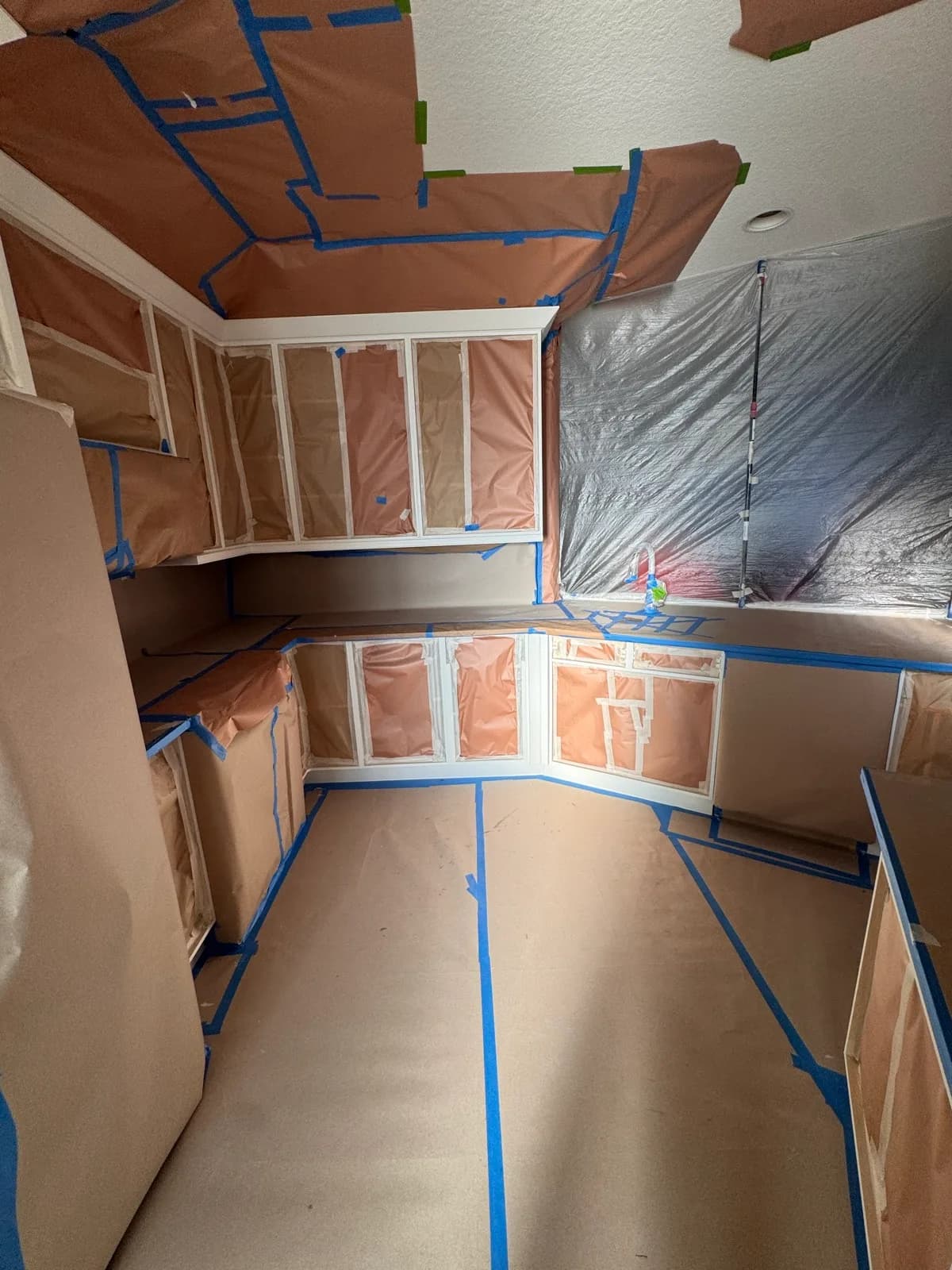
A refinished kitchen either looks like cabinetry or it looks like painted cabinetry, and the difference is mostly application. Brush marks read as brush marks on a flat door at eye level in a kitchen with downlights over it.
What spraying changes
A sprayed finish lays down as one continuous film with no tool texture in it. On a shaker door, where the eye follows a long flat rail, that is the whole difference between a finish that looks factory-applied and one that does not.
Doors and drawer fronts come off, get labelled, and are finished flat rather than hanging. Flat means the coating levels the way it is designed to instead of pulling downward while it cures.
What stays on the wall
Face frames and boxes are finished in place, because taking a kitchen apart is not something anyone wants to live through. Those are hand finished with attention to where the two meet, since the join between a sprayed door and a hand-finished frame is the place a refinishing job gets judged.
What this means for your kitchen
The practical consequences are worth knowing before you book:
- The kitchen is masked and sheeted while the frames are finished
- Doors are away for the part of the job where they are being coated and cured, and they come back with the hardware reinstalled
- Cure time is not dry time. A finish that is dry to the touch is not ready to be knocked with a saucepan, and we will tell you which is which
Refinishing does not fix a cabinet that has failed structurally, and it does not change a layout. What it changes is the colour and the finish, on the carcasses you already have.