
How polished plaster behaves in a Florida bathroom
Lime and Venetian plaster hold up well in humid rooms, but only if the wall underneath and the sealing schedule are right.
· 2 min read
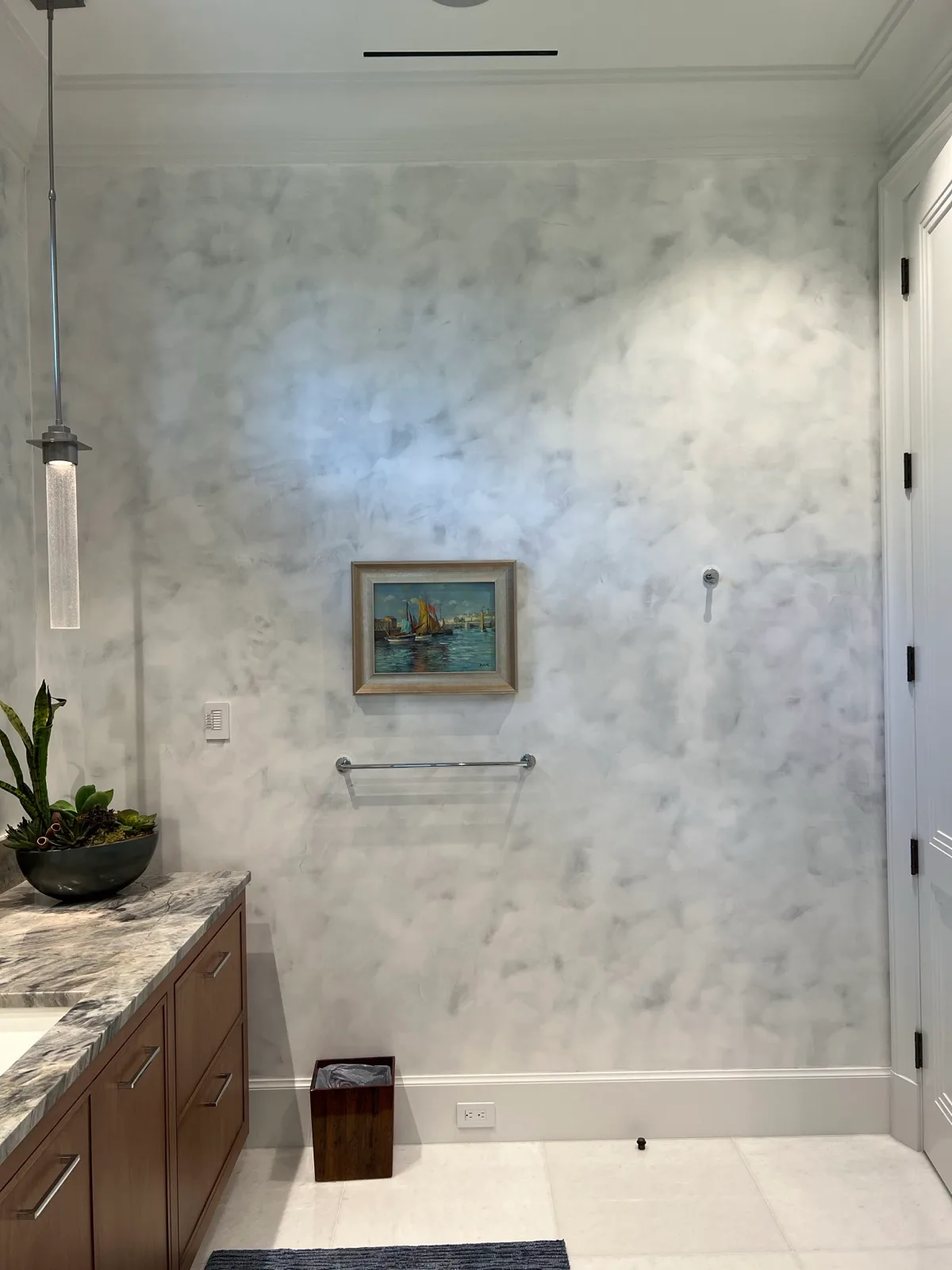
Polished plaster in a bathroom is one of the questions we get asked about most often, usually by somebody who has seen it somewhere and been told it will not survive the humidity here. It does survive it. What it will not survive is being applied over the wrong substrate or sealed on the wrong schedule.
Why plaster suits a humid room
Lime-based finishes are breathable. Moisture that gets into the wall can leave it again, which is not true of a film-forming coating sitting on top of the same wall. In a room that runs wet twice a day, breathability is an advantage rather than a compromise.
That is also why the sealer matters. Seal a lime finish with something impermeable and you have removed the property that made it the right choice.
Where it goes wrong
The failures we get called out to look at are nearly always one of three things:
- Applied over an unsound or unsuitable substrate. Plaster follows what is under it. A wall with a failing coating on it needs that dealt with first.
- Sealed too early. The finish has to be through its initial cure before anything goes over it.
- Taken into the shower enclosure itself. Direct, repeated water contact is a tiling job, not a plastering one, and we will say so.
What to expect on site
Plaster is applied in coats, by hand, with cure time between them. A bathroom wall is not a one-day job and anybody quoting it as one is describing something else. The trowel pattern is set by hand as well, which is why we work up a sample board on site rather than picking a finish off a photograph.
If you are considering it for a room that runs wet, the useful first step is for somebody to look at the wall that is already there.